Bench notes
Your camera sees pixels. Your paper needs paths.
How behavioural video tracking works, how to set up the camera and lights, and how to prove your data are clean.
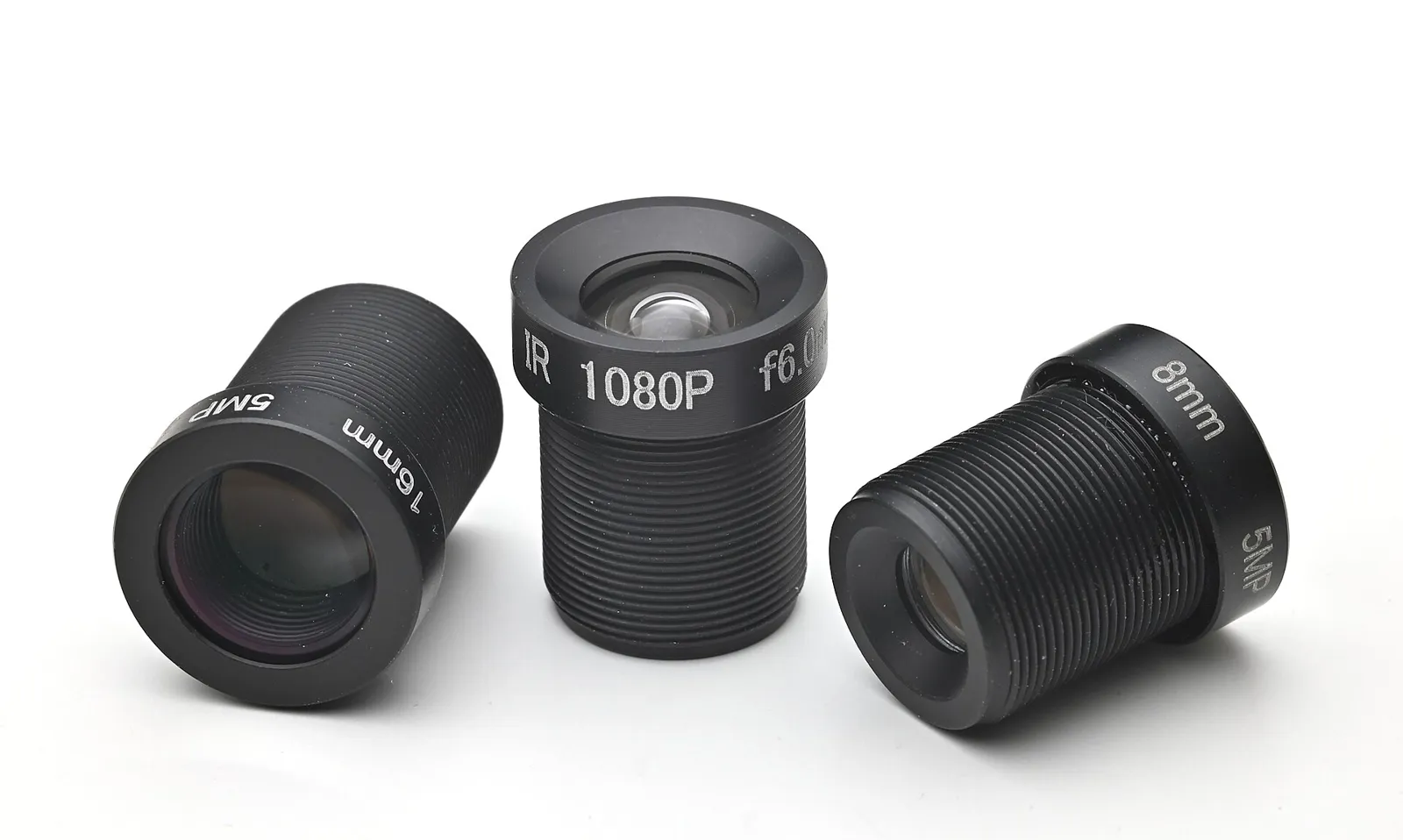
Image: credit
Video tracking looks like magic until it goes wrong. A reflection becomes a second mouse, a shadow eats a corner of the arena, and suddenly your animal has teleported across the pool at forty metres a second.
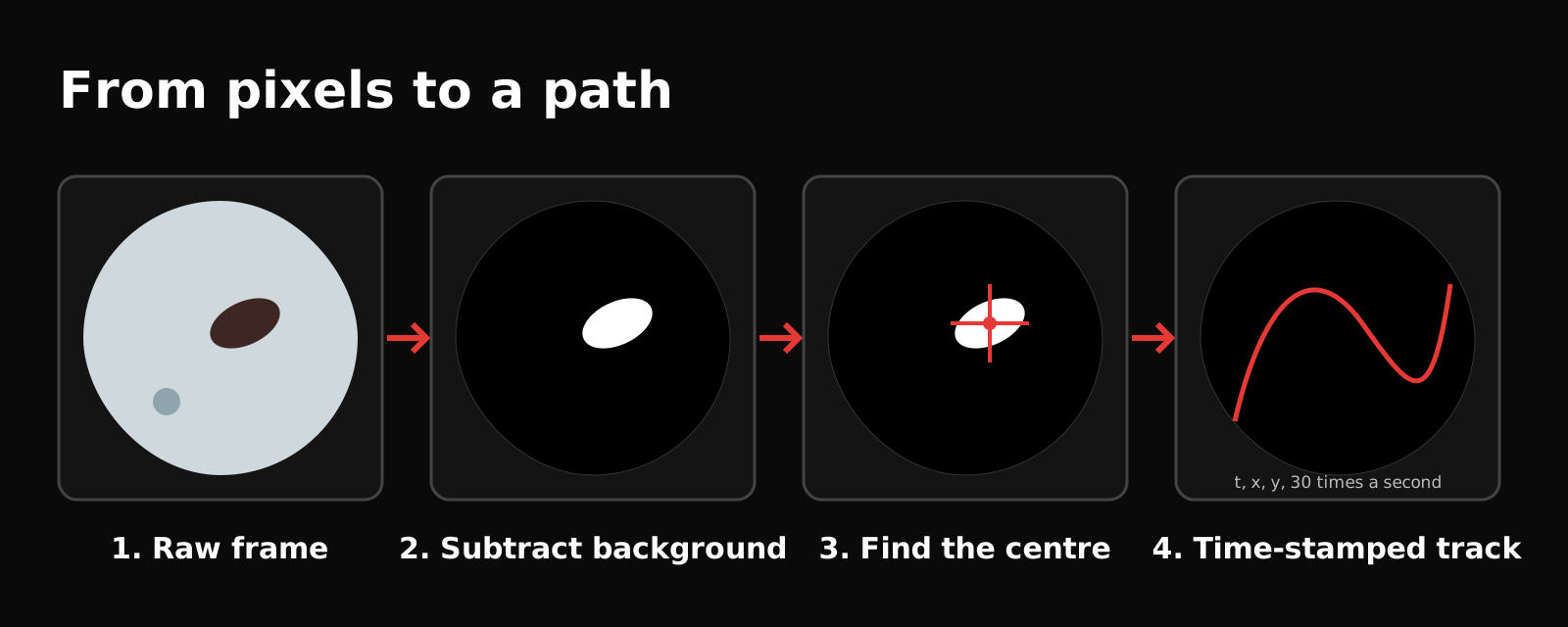
These notes take the opposite approach to magic. They explain what the software is doing in each frame, how a sensible camera and lighting set-up prevents most problems, which tests you can track, and how to check and report data quality before a reviewer does it for you.
Explore
On this site
How video tracking actually works
How behavioural video tracking finds an animal in each frame and turns raw video into time-stamped coordinates.
Camera and lighting, done right
Practical camera, lens and lighting advice for reliable animal video tracking.
Tests you can track
Common behavioural tests that video tracking supports, and the main measures for each.
Proving your tracking data are clean
How to check and report the quality of video tracking data in behavioural experiments.
Watch
HVS Image Morris water maze pool and platform calibration
Calibrating the pool and platform, the five minutes that make every later distance trustworthy.
Video from the HVS Image channel on YouTube. It's loaded in privacy-enhanced mode and only plays when you press play.
From the journals
Spotted on the wire
A third-party analysis program that still opens HVS Image files, a lab wiki that lists HVS Image among trackers, and recent work where cameras did the heavy lifting. Our rewrites; their originals.
A third-party analysis tool that still reads HVS Image files
Wintrack, the free water maze analysis program written by David Wolfer, keeps a page on one job only: opening path data from HVS Image's Water 2020 software, the package once called Water for Windows. Each .HVS file holds one trial or session sampled at a steady rate, and Wintrack wants that rate at 0.1 s, so the tracker goes on its SLOW setting if the data are heading that way. Older files ending .DRY or .WET are recognised too, the goal position comes across and fixes the target quadrant, and a plain text list of file names pulls a whole batch into one case document, with a space and a minus sign standing in for a missing trial. Platform coordinates, though, have to be typed in by hand. A small page, but a telling one: raw, time-stamped position files that other people's software can still open years later are exactly what you want from a tracker.
Read the original at Wintrack (David P. Wolfer)A lab wiki that still puts HVS Image on the tracking shortlist
Florida State University's Houpt Lab keeps a public MagnetoWiki page on building a water maze for mice. Under tracking software it names five commercial options side by side, and HVS Image is one of them, alongside Watermaze Software, Actimetrics, Biobserve and Muromachi's DV-Track. The same page also points readers to HVS Image for a list of suppliers that sell galvanised or polyethylene tanks. It is a working lab note, not a review article, and a useful reminder that when people write their own shopping list for video tracking, the brand still shows up in plain sight.
Read the original at MagnetoWiki (Houpt Lab)A muscle-powered robot the size of a stick of gum
A different kind of water maze: MIT engineers built a flat gel strip with fins of light-sensitive muscle cells. Flash one fin and it contracts, so the robot can be steered through a small obstacle course. Top speed is about four body lengths a minute, roughly the cruising pace of a sixgill shark. For tracking fans, it's a fresh case of following a swimmer frame by frame.
Read the original at NotebookcheckSoft food, older mice and the hippocampus's support cells
Female Swiss albino mice aged 6 or 18 months lived on hard pellets, soft food, or a switch between them, and astrocytes in one hippocampal layer were counted and measured. The team reanalysed earlier water maze data as a single contrast index, and older mice scored lower on day four. A study about texture, chewing and glia that uses maze data as its behavioural anchor. Published in Behavioral and Brain Functions.
Behavioral and Brain Functions
Read the original at Bioengineer.org